

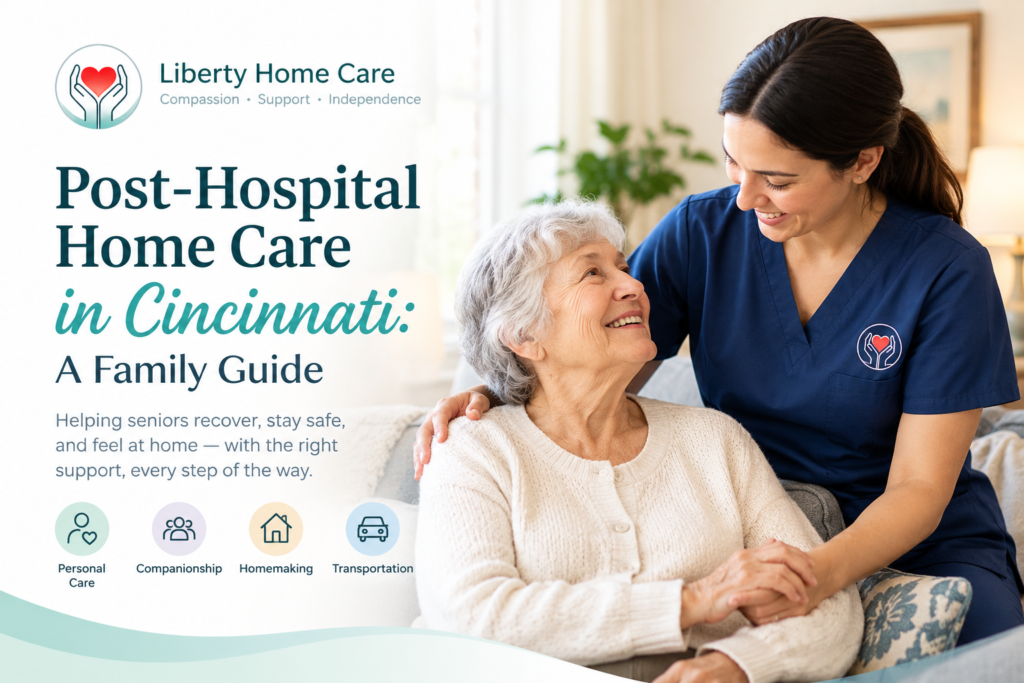
Returning home after a hospital stay can be an important milestone for older adults and their families. However, the transition from hospital to home may bring new challenges, including difficulty with everyday activities, meal preparation, mobility, transportation, and maintaining a comfortable living environment.
Post-hospital home care in Cincinnati can help seniors manage these daily challenges while providing families with additional support during the transition home.
For families in Greater Cincinnati, West Chester, Mason, Fairfield, Hamilton, and surrounding Ohio communities, understanding available home care options can make planning easier and less stressful.
In this guide, we will explore how non-medical home care can support seniors after a hospital stay, what families should prepare before discharge, and how to choose the right support for a loved one.
Why the Transition From Hospital to Home Matters
Leaving the hospital does not always mean that an older adult is immediately ready to manage every daily task independently. Some seniors may need temporary assistance with household responsibilities, personal care, transportation, or maintaining their regular routines.
Family members often want to help, but balancing caregiving with work, children, and other responsibilities can be challenging.
Planning for post-hospital home care in Cincinnati before a loved one returns home can help families identify their needs and arrange appropriate support.
Every person’s situation is different. The type and amount of assistance required will depend on the individual’s abilities, discharge instructions, living arrangements, and recommendations from their healthcare team.
5 Ways Home Care Can Help Seniors After a Hospital Stay
1. Assistance With Personal Care
After a hospital stay, everyday activities that once felt simple may require additional time or assistance.
Depending on an individual’s needs, a non-medical caregiver may help with:
- Getting dressed and maintaining personal hygiene
- Bathing and grooming assistance
- Moving around the home safely, within the caregiver’s role
- Preparing for daily activities
- Maintaining a comfortable and organized routine
Personal care support can help seniors maintain dignity and independence while receiving assistance with tasks they find difficult.
Families should discuss any mobility restrictions or special precautions with the healthcare team before arranging assistance.
2. Meal Preparation and Homemaking
Preparing meals, washing dishes, doing laundry, and keeping the home organized can become difficult when someone is recovering from an illness, injury, or procedure.
Homemaking support can help reduce these everyday responsibilities.
Depending on the agreed care plan, assistance may include:
- Preparing meals and snacks
- Washing dishes and cleaning kitchen surfaces
- Light housekeeping
- Laundry and changing bed linens
- Organizing commonly used household items
- Helping maintain a clean, comfortable living space
A well-organized home can make everyday routines easier for seniors and reduce some of the pressure on family caregivers.
3. Companionship and Emotional Support
A hospital stay can disrupt familiar routines and limit opportunities for social interaction. Some older adults may feel lonely, frustrated, or overwhelmed when they return home.
Companionship provides an opportunity for conversation, shared activities, and meaningful social interaction.
A companion may spend time talking with a senior, playing games, helping with hobbies, or offering support with everyday routines.
For families arranging post-hospital home care in Cincinnati, companionship can be an important part of helping a loved one feel supported at home.
Although companionship is not a substitute for professional medical or mental health treatment, regular social interaction can help make daily life feel more connected and comfortable.
4. Transportation to Appointments and Errands
Getting to follow-up appointments can be challenging when a senior is not yet comfortable driving or arranging transportation independently.
Depending on the service arrangement, transportation assistance may help with:
- Follow-up medical appointments
- Pharmacy visits and essential errands
- Hospital or procedure-related transportation
- Assistance coordinating return trips
- Other necessary community activities
Families should confirm transportation availability, scheduling requirements, and any mobility assistance needed before booking a service.
Keeping appointments and following the healthcare team’s instructions are important parts of a coordinated transition home.
5. Support for Family Caregivers
Family members frequently take on new responsibilities after a loved one returns home. They may need to coordinate appointments, prepare meals, manage household tasks, and provide personal assistance.
These responsibilities can become difficult to balance without additional help.
Home care services can allow family members to share some everyday caregiving responsibilities with a professional caregiver.
Depending on the family’s needs, scheduled assistance may provide time for work, personal commitments, rest, or other responsibilities while helping the senior maintain a familiar home routine.
How to Prepare Your Home Before a Senior Returns
Preparing the home before discharge can make the transition more manageable. Families should follow the healthcare team’s recommendations and consider the following practical steps.
Review the Discharge Instructions
Make sure the family understands the discharge plan, follow-up appointments, activity restrictions, and any instructions for medications or medical equipment.
Ask the healthcare team to clarify anything that is confusing. Non-medical caregivers should not be expected to make medical decisions or change prescribed treatment.
Make Everyday Areas Easier to Navigate
Walk through the home and look for potential hazards.
Consider removing loose rugs, clearing clutter from walkways, improving lighting, and checking that frequently used items are easy to reach.
If grab bars, mobility aids, or other modifications are recommended, arrange them before the senior returns home whenever possible.
The National Institute on Aging offers additional guidance on home safety tips for older adults.
Prepare Meals and Household Essentials
Stock the kitchen with suitable groceries and organize commonly used household supplies.
Place frequently needed items where they can be reached comfortably, and make sure the bedroom, bathroom, and main living areas are ready for everyday use.
Arrange Help in Advance
Identify who will assist with transportation, meals, housekeeping, personal care, and other daily needs.
If family members cannot provide consistent assistance, consider arranging professional home care before the discharge date.
Planning early can help prevent avoidable confusion during the first days at home.
Non-Medical Home Care vs. Skilled Home Health Care
Families should understand that non-medical home care and skilled home health care serve different purposes.
Non-medical home care generally focuses on daily living assistance, companionship, homemaking, and other agreed household or personal support services.
Skilled home health care may involve services such as nursing, wound care, or physical therapy when medically necessary and appropriately ordered.
Some seniors may need both types of support, depending on their circumstances.
Medicare coverage for home health services has specific eligibility requirements and does not generally cover standalone custodial or personal care when that is the only care needed. Families should verify coverage and costs directly with their providers and insurers.
For more information, visit Medicare’s official home health services coverage guide.
Understanding these differences helps families choose services that match their loved one’s needs without expecting a non-medical caregiver to perform skilled medical tasks.
Choosing Post-Hospital Home Care in Cincinnati
Finding the right caregiver involves more than arranging a schedule. Families should look for services that match the senior’s daily needs, preferences, and home environment.
Before choosing a provider, consider these questions:
- What personal care and household assistance is available?
- Can services be scheduled around the senior’s routine?
- Is transportation available when needed?
- How does the provider communicate with family members?
- What are the service rates, scheduling requirements, and cancellation policies?
- Are caregivers appropriately screened and trained for their responsibilities?
- Can the provider accommodate the senior’s specific non-medical support needs?
It is also important to communicate any mobility limitations, memory-related concerns, allergies, and other relevant care considerations before services begin.
Families in West Chester, Mason, Sharonville, Fairfield, Hamilton, Liberty Township, and nearby Greater Cincinnati communities should confirm service availability for their specific location.
How Liberty Home Care Supports Families in Greater Cincinnati
When a loved one returns home after a hospital stay, having reliable help with everyday tasks can make family caregiving more manageable.
Liberty Home Care provides non-medical home care services designed to support seniors and families in Greater Cincinnati and surrounding Ohio communities.
Depending on individual needs and service availability, support may include:
- Personal Care: Assistance with agreed everyday personal care activities.
- Companionship: Conversation, social interaction, and support with daily routines.
- Homemaking: Light housekeeping, laundry, and meal preparation.
- Transportation: Assistance with eligible appointments and essential trips.
- Transition-to-Home Support: Practical assistance with everyday activities as a senior settles back into their home routine.
The goal is to help seniors maintain comfort, dignity, and independence while giving families additional support with daily responsibilities.
Liberty Home Care’s non-medical services are intended to complement, not replace, medical care and instructions from healthcare professionals.
If your loved one is preparing to return home, discussing available services in advance can help your family create a more organized plan.
Frequently Asked Questions
What is post-hospital home care?
Post-hospital home care is support arranged after a hospital stay to help an individual manage the transition home. Non-medical services may include personal care, companionship, meal preparation, light housekeeping, and transportation.
Does Medicare cover non-medical home care?
Medicare generally does not cover standalone custodial or personal care when that is the only care a person needs. Coverage depends on the type of service and eligibility requirements. Families should review the official Medicare guidelines and confirm their individual benefits.
How soon should I arrange home care after a hospital stay?
Whenever possible, begin planning before the expected discharge date. This gives the family time to identify daily support needs, prepare the home, and confirm caregiver availability.
Can a non-medical caregiver provide medication or medical treatment?
Non-medical caregivers should work within their permitted responsibilities and the agreed service plan. Skilled medical treatments, clinical assessments, and changes to prescribed treatment should be handled by appropriately qualified healthcare professionals.
Where can I find post-hospital home care in Cincinnati, Ohio?
Families can contact local home care providers serving Greater Cincinnati and nearby communities to discuss available services, schedules, and individual needs. Liberty Home Care can be contacted to learn more about its non-medical home care options and service availability.
Plan a More Supported Transition Home
Bringing a loved one home after a hospital stay can involve many responsibilities, but families do not have to manage every daily task alone.
With thoughtful preparation, appropriate home safety measures, and the right level of assistance, seniors can receive practical support while continuing their daily routines at home.
If your family is exploring post-hospital home care in Cincinnati, Liberty Home Care can help you learn more about available non-medical support options.
Contact Liberty Home Care to discuss your family’s needs and ask about service availability.
Phone: 513-436-4112
Email: libhomecare@gmail.com
Serving Greater Cincinnati and surrounding Ohio communities, subject to service availability.
Disclaimer: This article is for general informational purposes only and is not medical advice. Follow the instructions of your healthcare provider and discharge team when planning care after hospitalization.